


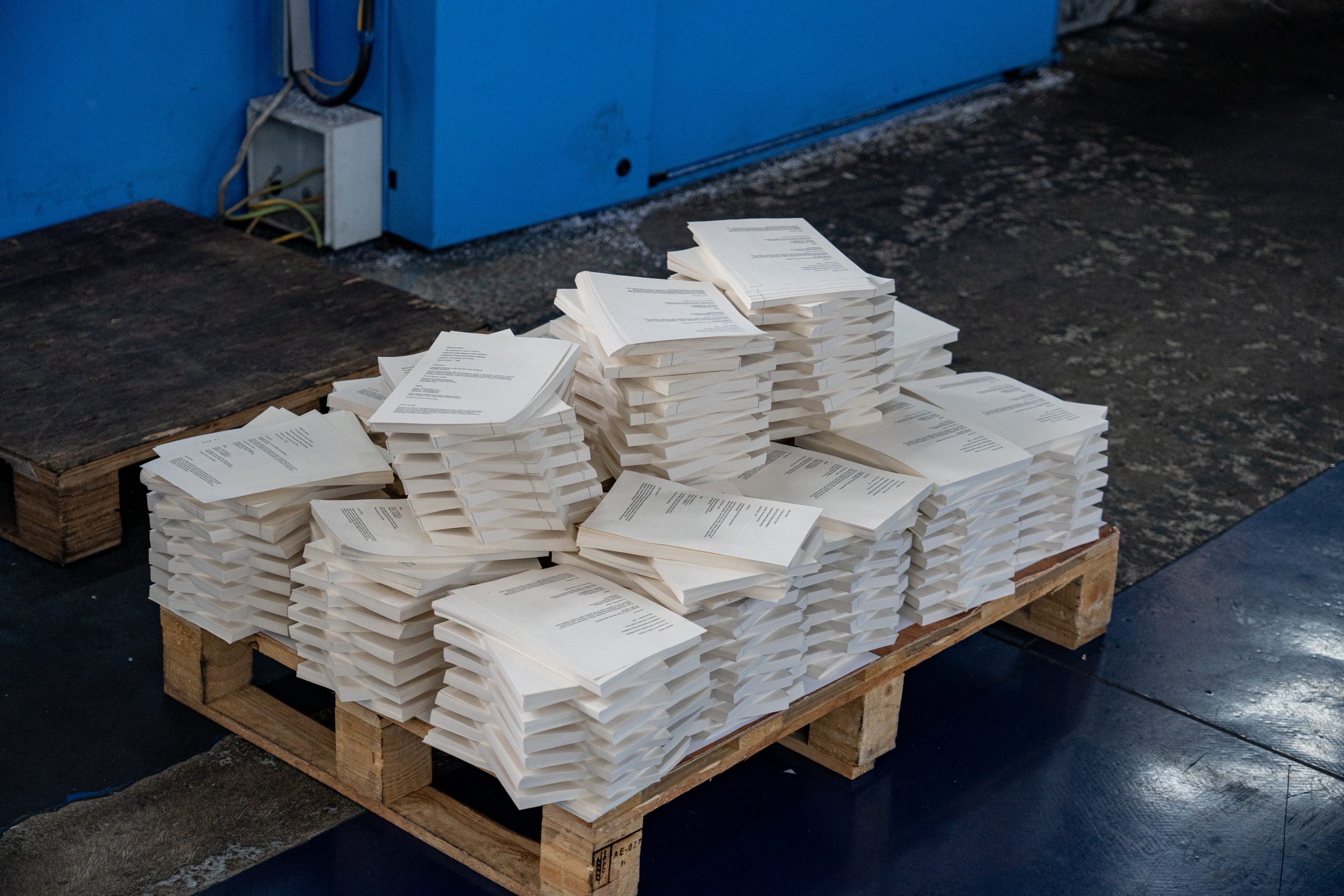
How Printed Hard Copies Win Costly Legal Disputes
July 10, 2026Categorised in: Blog
In tribunal disputes, digital messages and emails are often challenged or dismissed. Printed paper trails provide a reliable layer of accountability that can strengthen your position during disputes, audits and investigations.
Here is what you will learn:
- The critical weight of printed evidence in South African labour disputes.
- Why courts and regulators still require physical custody alongside digital filings.
- How to protect payroll, transactional and disciplinary records.
- A practical protocol to strengthen your audit and dispute readiness.
During any dispute, digital evidence like emails, system logs or PDFs often gets scrutinised. Commissioners and judges want proof they can trust.
That’s why you need to have a solid printed paper trail. Original, signed and properly archived documents provide credible, verifiable evidence that can support your position during labour claims, audits and commercial disputes while helping reduce administrative risk.
At Uniprint Global, we see that businesses investing in secure physical records strengthen their audit readiness through thermal till rolls, structured print tracking and reliable record-keeping processes that support dispute resolution and compliance.
Labour Law and the Power of Physical Evidence
Under the Labour Relations Act 66 of 1995, fair process and verifiable evidence are essential. Disciplinary warnings, meeting minutes and signed acknowledgements carry far more weight when they are created and signed at the time of the event and stored securely on paper.
Having your physical records backed up, you eliminate administrative friction by providing commissioners and courts with clear, verifiable supporting documentation.
The E-Justice Dual-Custody Trap
South Africa’s CaseLines portal has digitised many litigation workflows, but organisations should still retain original signed documents where possible, as physical records may be required for verification, audits or evidentiary purposes.
While digital systems are useful for delivery, physical documents often remain important for verification and record-keeping purposes. You need to produce high-volume transactional documents designed to provide stronger record-keeping support.
Where Printed Records Make the Biggest Impact
- Labour & CCMA disputes: Signed disciplinary records and payroll documents become critical evidence.
- SARS audits: Original transactional invoices and ledgers support your position when digital records raise questions.
- Commercial disagreements: Printed delivery notes, waybills and contracts provide clear proof of what was agreed.
- Retail operations: Tamper-evident thermal till rolls offer immediate, time-stamped proof in cash disputes, refunds or theft cases.
High-quality printing with archival paper and security features ensures these records remain reliable for years.
5-Step Physical Record Protocol
Administrative gaps in recordkeeping expose South African businesses to direct financial penalties and unresolved disputes. Incomplete or inadequate documentation is a structural liability.
To survive forensic verification of transactional records, make sure you:
- Sign disciplinary notes immediately.
- Store originals in a secure physical archive.
- Use dated transactional documents with sequence numbers.
- Keep records for 5+ years for labour disputes.
- Follow the 3-2-1 rule (3 copies, 2 formats, 1 physical off-site).
Protect Your Business Interests
Uniprint Global’s high-volume security print frameworks eliminate digital volatility and secure your operational sovereignty.
- Printed disciplinary records that support labour dispute documentation
- Transactional printing solutions that support record-keeping requirements
- Tamper-evident thermal till rolls for retail
- High-volume industrial printing capacity
When disputes, audits or compliance reviews arise, the strength of your documentation matters. Protect your business with reliable, verifiable printed records that support accountability, audit readiness and dispute resolution. Schedule a print security review with Uniprint Global today.
Frequently Asked Questions
1. Why are printed hard copies important in legal disputes?
Printed hard copies can provide a clear and verifiable record of transactions, agreements, disciplinary actions and communications. Original signed and dated documents can help establish authenticity, demonstrate accountability and support a business during legal disputes, audits and investigations.
2. Why do CCMA commissioners often reject digital-only evidence?
Digital files may require additional verification to establish their authenticity and reliability. Original signed documents can provide a clearer evidentiary trail, particularly where the accuracy, authorship or integrity of emails, PDFs or electronic records is challenged during a labour dispute.
3. What is the dual-custody requirement in South African e-courts?
Although documents can be submitted through digital court platforms such as CaseLines, businesses should retain original signed documents where appropriate. Physical originals may be needed to support verification, evidentiary requirements, audits or regulatory compliance when the authenticity of a digital copy is questioned.
4. Are printed documents stronger evidence than emails?
Not automatically. The strength of evidence depends on its relevance, authenticity, reliability and the circumstances of the dispute. However, original signed and dated printed documents can provide valuable supporting evidence when an email, PDF or other electronic record is disputed or requires additional verification.
5. How do physical till rolls provide forensic verification in retail disputes?
Thermal till rolls provide physical, time-stamped transaction records that can support investigations involving refunds, cash discrepancies, theft or customer disputes. Archival-quality thermal paper, secure storage and consistent transaction records can help preserve this information for later verification.
6. What happens if a business loses its printed payroll or labour records before an audit?
Missing records can make it more difficult for a business to verify transactions, demonstrate compliance or support its position during an audit or dispute. Businesses should maintain appropriate backup copies and record-retention procedures so important information remains accessible if physical or digital records are lost.
7. How long should businesses keep printed financial and transactional records in South Africa?
Retention periods depend on the type of document and the legislation that applies to it. Some tax, accounting, employment and corporate records have specific statutory retention periods. Businesses should establish a documented retention schedule based on applicable South African legal and regulatory requirements rather than applying one period to every record.
8. How can businesses protect printed hard copies used as legal evidence?
Businesses should store original documents securely, restrict unauthorised access, use consistent dating and numbering systems, preserve signed originals and maintain appropriate backups. Archival-quality paper and secure document-management procedures can also help protect records from deterioration, alteration or loss.