


Why Label Accuracy Matters More Than Ever in Fast-Moving Supply Chains
September 15, 2026Categorised in: Blog
In high-volume industries, even a minor labelling error can trigger a whole onslaught of operational delays across warehousing, logistics and retail. This guide explains how inaccurate barcodes disrupt modern supply chains and what businesses must do to achieve consistent, compliance-ready print quality under demanding South African conditions.
- The single-pallet ripple effect in warehouse operations.
- Compliance risks regarding SAHPRA and local food regulations.
- How South African climates affect label materials.
- A 5-point checklist for consistent barcode scanning performance.
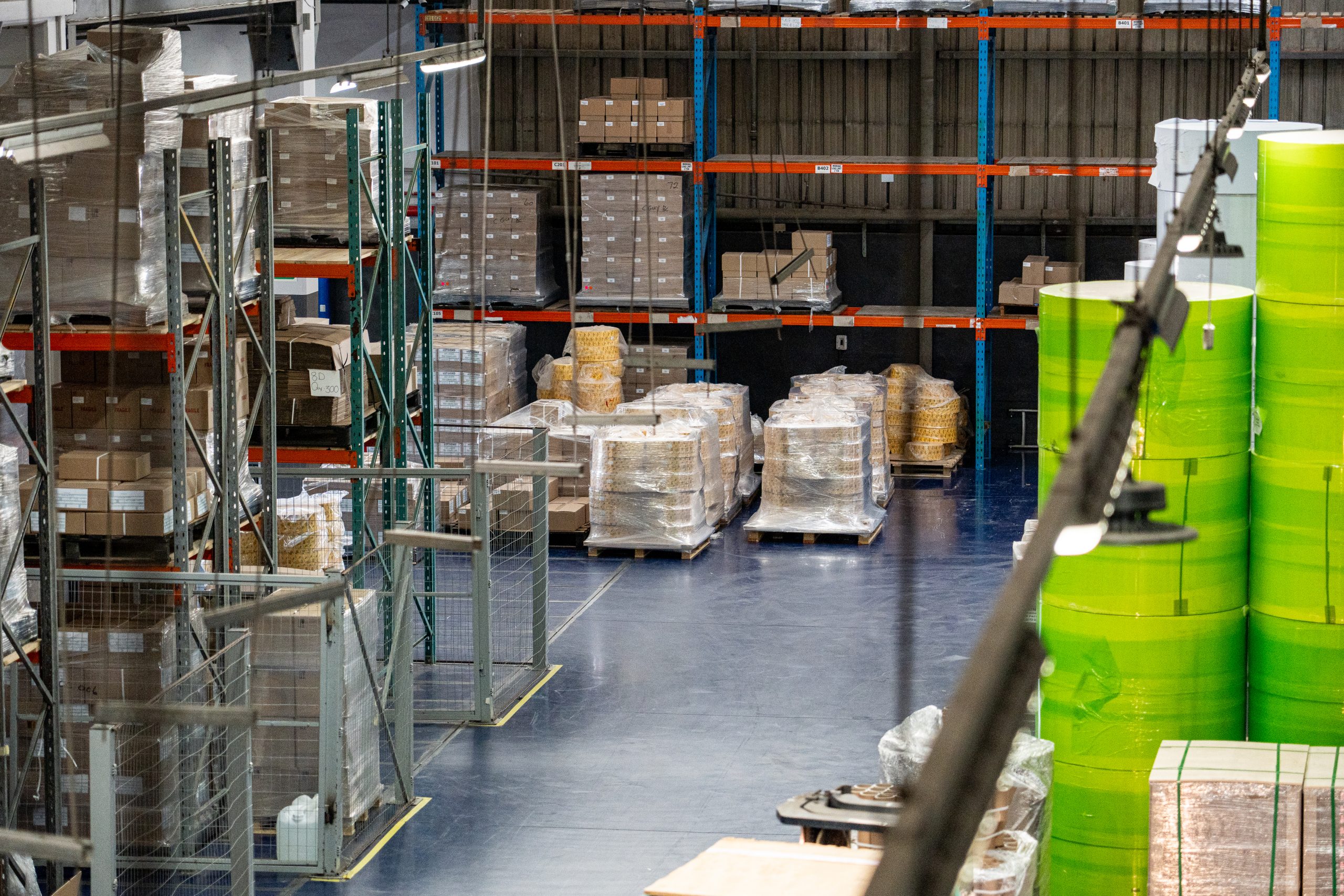
If you have ever stood on the floor of a fast-moving South African distribution centre, you know how quickly things can grind to a halt. A single pallet arrives at a receiving gate with an unreadable barcode. The scanner beeps in error, the forklift stops, and a staff member is forced to capture the data manually. That one small label failure delays the truck turnaround time and introduces human error that ripples all the way downstream to the retail shelf.
Labels are the true operational backbone of modern logistics. Uniprint Global is an industry leader in variable-data printing and transactional documents. We manufacture high-quality labels, waybills, and tracking documents for corporate customers across Africa, helping your logistics networks run smoothly, accurately and in compliance with industry standards.
How Label Errors Affect Supply Chains
Barcode scanning failures can quickly turn into catastrophic inventory problems. When a misprinted barcode fails at a checkpoint, warehouse teams have to put in double time to enter the information manually. That, unfortunately, tends to slow down truck turnaround times, increase the risk of mistakes, and delay the next steps in distribution.
As robotics and automated systems become more common in logistics, reliable barcodes matter even more. Machines rely on labels they can read instantly. If a barcode is blurry, low-contrast, or incorrectly printed, it can force manual intervention and, in some cases, bring an automated sorting line to a complete stop.
What Causes Label Scanning Failures?
Most label scanning issues come down to printing or application problems that can be prevented. Common causes include:
- Faint or low-contrast printing that scanners struggle to read
- Labels applied over curved surfaces, shrink wrap, or box seams
- Thermal materials that are outdated or not durable enough, causing labels to fade, smudge, or tear in transit
- Barcodes that are the wrong size or use a format the receiving scanner can’t read
High-performance materials, correct print settings, and real-world testing prevent these problems before products enter the supply chain.
Compliance Risks in Regulated Industries
For clients operating in regulated sectors, label accuracy is a strict legal requirement that helps keep their businesses’ doors open.
- Health Products: The South African Health Products Regulatory Authority (SAHPRA) mandates phased traceability requirements. These include adhering to GS1 standards, GTIN, batch/lot numbers, expiry dates, and unique serial numbers. Health product barcodes must meet strict print-quality grades to ensure end-to-end patient safety.
- Food Manufacturing: South African food regulations (like R146) demand precise ingredient declarations, allergen warnings, batch numbers, and date markings. Mislabelling in the food sector can trigger costly product recalls, severe regulatory fines, and lasting reputational damage to your brand.
5-Point Checklist for Consistent Label Performance
To avoid operational delays and keep your supply chain moving, it’s important to build label quality into the process before goods leave the building. Use this practical checklist with your logistics team:
- Target ISO/IEC 15416 Standards: Aim for a minimum print quality of Grade B or C to help ensure barcodes remain readable in the varied, often poor lighting conditions found in warehouses.
- Climate-Match Your Materials: Choose label substrates and adhesives designed to resist fading, smudging, and tearing during long-haul transit, especially in hot, dusty, or demanding conditions
- Verify Scanner Compatibility: Make sure your barcode type, size, and placement work with the scanning hardware used by your receiving partners.
- Build in Redundancy: Where possible, place a second barcode on another side of the pallet or carton. If one label is damaged in transit, there’s still another barcode available to scan.
- Partner for Variable-Data Printing: Partner with a supplier that can manage complex, sequential variable-data runs, helping ensure each label carries accurate, unique tracking information at scale.
Uniprint Global helps businesses meet these requirements with reliable label production, large-scale variable-data printing, and standards that support compliance from the start.
Improve your supply chain efficiency with high-quality labels from Uniprint Global. Contact us to discuss custom label printing, variable-data solutions and compliance-ready barcodes for your business.
FAQS
Q: Why does label accuracy matter in fast-moving supply chains?
A: Accurate labels help barcodes scan properly at every checkpoint, keeping goods moving without unnecessary hold-ups. When labels are easy to read, warehouses can avoid manual data entry errors, delayed truck turnarounds, and inventory tracking issues that waste time and money.
Q: What causes label scanning failures in warehouses?
A: Label scanning issues are often caused by faint or low-contrast printing, damaged labels, or labels placed over seams, curves, or uneven surfaces. When scanners can’t read the information quickly and reliably, it slows down the entire process.
Q: Which industries need accurate labels for compliance in South Africa?
A: Pharmaceuticals and food manufacturing are two industries where label accuracy is especially important. In healthcare, SAHPRA requires detailed GS1 traceability and clear print-quality standards for health products. In food production, manufacturers need accurate ingredient, allergen, and batch information to meet regulations and avoid costly recalls.