


Why Some Documents Must Still Exist Physically in the 21st Century
July 20, 2026Categorised in: Blog
A digital record may seem permanent, but its existence depends entirely on the stability of your systems. When technology falters or a regulator requests original proof, only a physical document provides the certainty and authenticity that compliance demands.
Here is what you will learn:
- Regulatory risks under SARS Section 29 and other key legislation.
- How South African courts view original physical evidence.
- The role of physical archives in data sovereignty and cyber resilience.
- A practical, balanced strategy for digital + physical records.
We all love the convenience of digital records. But the uncomfortable truth is that a digital file only exists as long as your systems, backups and electricity keep working. When a tax audit lands, a regulator asks for proof or ransomware hits, many businesses discover too late that their “permanent” digital records are already gone, making it difficult to verify information or retrieve records when they are needed most.
That’s exactly why certain documents still need to live on paper. Physical records provide an additional layer of permanence, evidentiary support and resilience against technology failures. Overreliance on digital systems can create vulnerabilities when records become inaccessible, corrupted or difficult to verify.
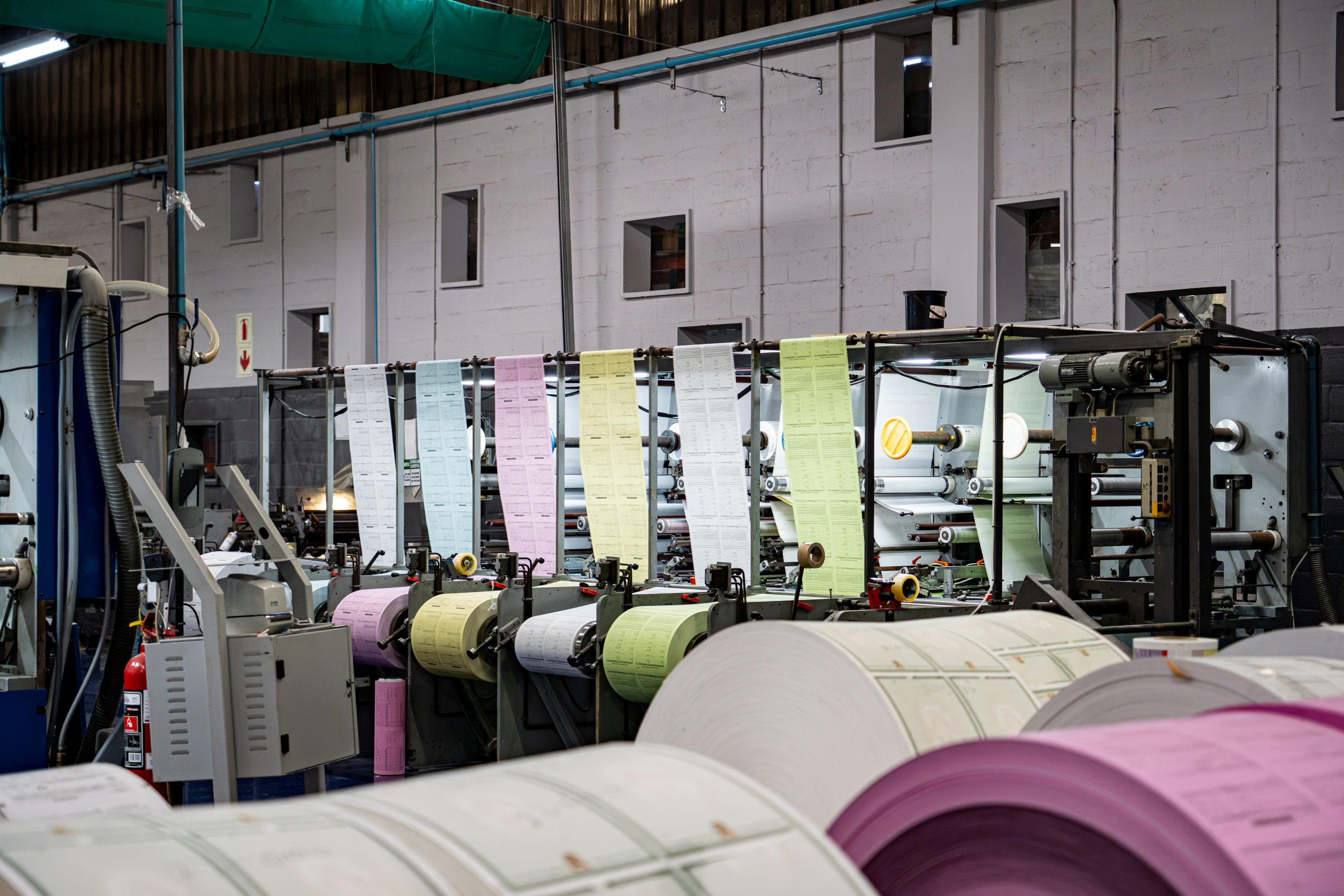
At Uniprint Global, we’ve helped organisations across South Africa strengthen their record-keeping processes through high-security transactional documents that provide a reliable physical record independent of network failures, ransomware attacks and system outages.
The Legal Admissibility of Documents
Original documents often play an important role in establishing authenticity and supporting evidentiary requirements in legal proceedings.
- Tax Administration Act (Section 29): SARS accepts electronic records, but they must be kept in their original form or an approved electronic format, in an orderly and safe manner and readily accessible. Many businesses encounter challenges during audits when metadata is missing or when files cannot be properly authenticated. In such cases, a printed original can provide an additional layer of verification when questions arise around authenticity or accessibility.
- Companies Act (Section 24 of Act 71 of 2008): Requires retention of financial records, minutes and resolutions for at least five years. Electronic versions are permitted if verifiable, but physical copies provide an additional layer of resilience should digital records become inaccessible or compromised.
- Financial Services (FSCA): The General Code of Conduct demands accurate, complete and accessible records. Many providers keep physical backups for forensic audits where digital tampering risks are high.
High-quality, archival paper with proper security features can remain readable and trustworthy for 50 years or more when stored correctly.
System Independence and Security Print
Industry compliance often depends on records that exist outside your digital environment. Physical archives can play an important role in maintaining record availability and supporting verification requirements.
- Legal: Law firms must retain original signed agreements. Electronic filing systems still require physical custody.
- Healthcare: The Health Professions Council of South Africa (HPCSA) requires medical records to be retained for specified periods.
- Construction: Contract variations and signed change orders are often critical during contractual and project-related disputes.
How to Balance Digital and Physical Archives
You don’t have to choose one or the other. The smartest approach is a simple 3-2-1 backup strategy:
- Keep three copies of important records
- Use two different formats (digital + physical)
- Store one physical copy off-site
Practical Recommendations To Balance The Archives
- Print and securely archive key documents: signed contracts, high-value invoices, tax records and statutory certificates.
- Use digital for everyday speed and access.
- Work with a specialist printer who understands compliance requirements.
This hybrid approach preserves operational sovereignty when digital systems inevitably face challenges.
Your Compliance Infrastructure Shouldn’t Depend On Server Stability
Get industrial-scale high-security transactional printing from Uniprint Global, the manufacturer of Africa’s most trusted security documents.
- Printed records that support SARS record-keeping requirements
- Transactional documents designed to support audit and dispute documentation
- Properly stored archival-quality documents remain readable for 50+ years
- Industrial volume printing capacity
Contact Uniprint Global to strengthen your document security, record-keeping and compliance readiness.
Frequently Asked Questions
1. Why are physical documents still important in the digital age?
Physical documents remain important because they provide a system-independent record that can still be accessed when digital systems fail, data becomes corrupted or cyber incidents disrupt access. For important legal, financial and compliance records, maintaining physical copies can also provide additional evidence of authenticity and support business continuity.
2. What happens if a server crash destroys digital tax records?
Section 29 of the Tax Administration Act requires taxpayers to retain records, books of account and documents needed to comply with a tax Act. If digital records are lost or become inaccessible, a business may face difficulties demonstrating compliance during a SARS audit. Securely retained physical documents can provide an additional record where appropriate.
3. How do physical documents protect against ransomware?
Physical documents exist outside computer networks and therefore cannot be encrypted or made inaccessible directly by ransomware. Maintaining secure physical copies of critical records can provide an independent backup when servers, cloud platforms or internal systems are affected by a cyberattack.
4. Which business records should be kept in physical form?
Businesses should consider retaining physical versions of records where originals, signatures, authenticity or long-term accessibility are particularly important. Depending on applicable legal and regulatory requirements, these may include signed contracts, statutory certificates, important financial records, property documents and other records that may be required during audits or disputes.
5. Why do South African regulators still require original physical records?
The requirements vary according to the legislation, regulator and type of record involved. Although many South African regulatory frameworks permit electronic records when specific conditions are met, original or physical documents can remain important where authenticity, signatures, evidentiary value or reliable long-term access must be demonstrated.
6. Are electronic records legally acceptable in South Africa?
Yes. Electronic records can be legally recognised in South Africa, subject to the requirements applying to the particular record and circumstances. Businesses should ensure electronic documents remain authentic, complete, accessible and properly retained. A hybrid record-keeping strategy can provide additional resilience for particularly important documents.
7. How long can properly stored physical documents last?
High-quality archival documents can remain readable for decades when appropriate paper, inks and storage conditions are used. Their lifespan depends on factors such as paper quality, temperature, humidity, exposure to light and protection from water, fire and physical deterioration.
8. What is the best way to combine digital and physical record keeping?
A practical approach is to maintain multiple copies of critical records across different formats and locations. Businesses can use digital records for efficient everyday access while securely storing physical copies of high-value or compliance-sensitive documents. This reduces reliance on a single system and strengthens business continuity.